How a 360° Digital Marketing Strategy Helps Businesses Grow
09 October 2026
How a 360° Digital Marketing Strategy Helps Businesses Grow
In today’s competitive digital landscape, businesses need more than an online presence to stand out. They need a clear strategy that connects their brand with the right audience, builds trust, generates quality leads, and drives measurable results.
This is where a 360° Digital Marketing Strategy makes a difference. Instead of treating SEO, social media, paid advertising, content, and branding as separate activities, it brings them together under one unified approach. Every channel works towards a common business objective, helping brands build visibility, engage potential clients, and create sustainable growth. For businesses looking to strengthen their digital presence, partnering with a full-service agency like Golden Gate can help bring every aspect of their online marketing strategy together.
What is a 360° Digital Marketing Strategy?
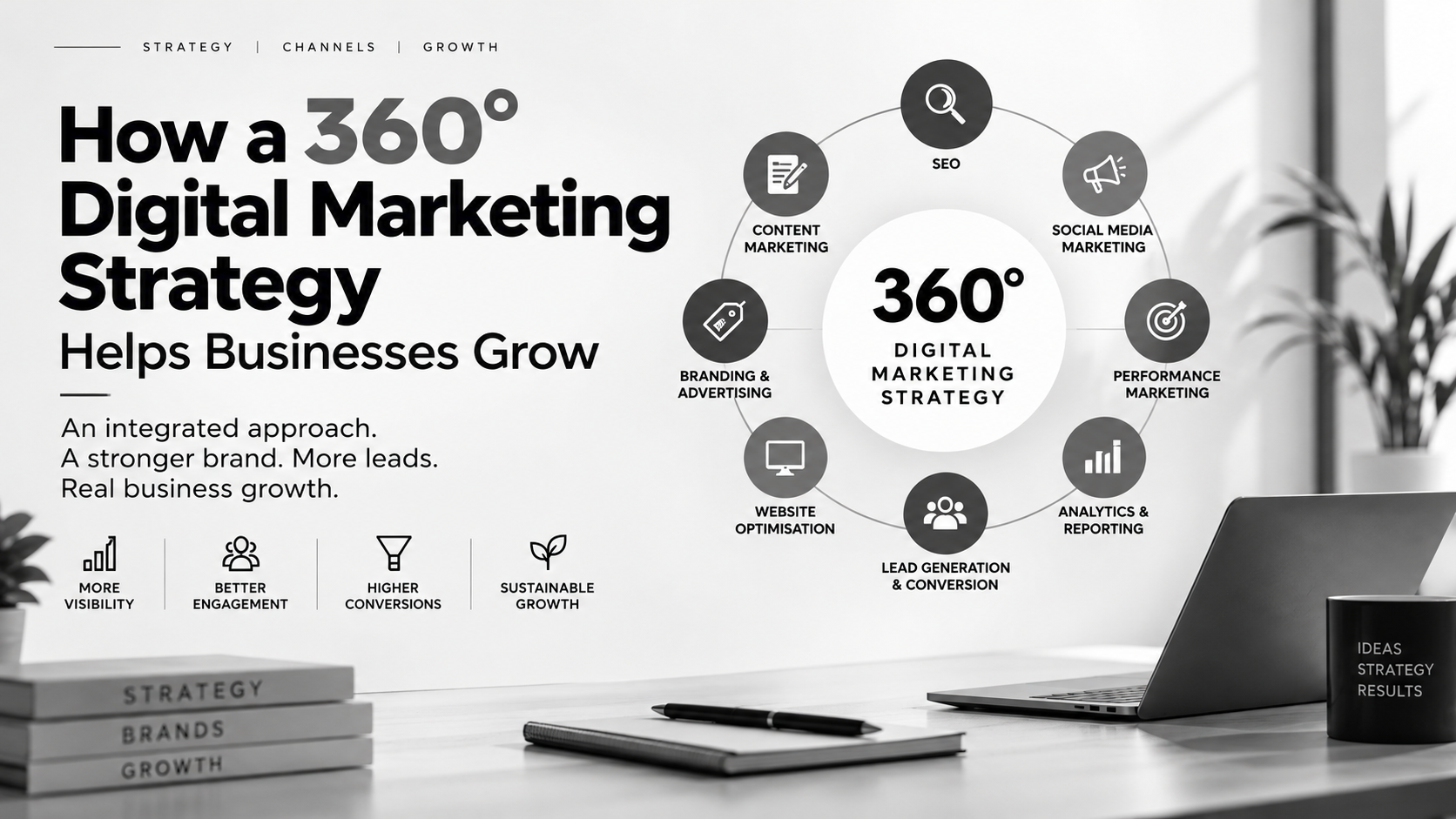
A 360° digital marketing strategy is an integrated approach that covers the entire digital customer journey, from discovering a brand to becoming a customer and eventually a loyal advocate. It combines multiple digital marketing services to ensure consistent communication across platforms. Whether a customer finds your business through Google, sees an advertisement on social media, or visits your website after reading a blog, every interaction contributes to the overall brand experience. A well-planned strategy typically includes:
● Search Engine Optimisation (SEO)
● Social media marketing and management
● Performance marketing and paid advertising
● Content marketing and copywriting
● Website optimisation and user experience
● Digital branding and advertising
● Lead generation and conversion optimisation
● Analytics, reporting, and campaign performance tracking
When these elements work together, businesses can create a more consistent online presence and make better use of their marketing budgets.
Why Do Businesses Need an Integrated Digital Marketing Strategy?
Using individual marketing channels without a shared direction can lead to inconsistent messaging, disconnected campaigns, and missed opportunities. An integrated approach helps businesses build stronger connections between their marketing activities and overall goals. Here are some of the key ways a 360° approach supports business growth.
1. Builds a Strong and Consistent Brand Identity
Your brand is more than a logo or a tagline. It is the overall impression people form through every interaction with your business. Consistent messaging, visual identity, tone of voice, and communication across platforms help clients recognise and remember your brand. From your website and social media profiles to paid advertisements and marketing campaigns, every touchpoint should reflect the same brand personality. Through coordinated digital branding and advertising, businesses can create a recognisable identity, establish credibility, and differentiate themselves in a crowded marketplace.
2. Improves Online Visibility Through SEO
Having a website is only the first step. Your potential clients must be able to find it when they search for relevant products, services, or solutions. Search Engine Optimisation helps improve your website's visibility on search engines by targeting relevant keywords, creating useful content, improving technical performance, and strengthening the overall user experience.
As part of a broader digital marketing strategy for business growth, SEO helps attract users who are already looking for what your business offers. It can support long-term organic traffic, improve brand discovery, and generate relevant enquiries over time. When SEO works alongside content marketing and paid search campaigns, businesses can build a more comprehensive search presence.
3. Reaches the Right Audience With Performance Marketing
Generating traffic is important, but attracting the right audience matters even more. Performance marketing uses paid campaigns, audience targeting, conversion tracking, and ongoing optimisation to help businesses reach potential clients more effectively. Depending on the campaign objectives, this may include Google Ads, paid social media campaigns, remarketing, or lead-generation advertisements.
Combining SEO and performance marketing allows businesses to balance long-term organic growth with targeted campaigns designed to generate quicker visibility and measurable actions. By analysing campaign data and refining targeting, creatives, and landing pages, businesses can make more informed decisions about their advertising investments.
4. Creates a Connected Customer Journey
clients rarely make decisions after a single interaction with a brand. They may discover a business through social media, research its services on Google, read a blog, compare alternatives, and then submit an enquiry.
A disconnected marketing approach can make this journey confusing. An integrated digital marketing strategy creates a more consistent experience across these touchpoints. For example, a social media campaign can introduce a service, a search-optimised blog can answer customer questions, and a well-designed landing page can encourage visitors to take the next step. When every channel supports the same objective, businesses can guide potential clients from awareness to consideration and conversion more effectively.
5. Generates Better-Quality Leads
More leads do not always mean better business results. What matters is attracting people who genuinely need your product or service and are more likely to convert. A full-service digital marketing agency can align audience research, content, SEO, paid campaigns, landing pages, and conversion tracking to improve the quality of incoming enquiries. For example, targeted advertising can reach a relevant audience, while informative website content helps answer their questions before they contact your sales team. This coordinated approach helps businesses identify what attracts qualified prospects, understand where potential clients drop off, and improve the conversion process.
6. Makes Marketing Performance Easier to Measure
One of the biggest advantages of digital marketing is the ability to track campaign performance and use that information to make improvements. With integrated reporting, businesses can evaluate metrics such as website traffic, search visibility, cost per lead, conversion rates, customer acquisition costs, and return on advertising spend.
Instead of looking at each platform in isolation, an integrated approach helps marketers understand how different activities contribute to the overall business objective. These insights can guide decisions about budget allocation, audience targeting, content priorities, and campaign optimisation.
Key Digital Marketing Services That Work Better Together
A successful 360° strategy is built around the right combination of services. Each channel serves a distinct purpose, but its impact can improve when it supports the others.
Search Engine Optimisation and Content Marketing
SEO helps customers discover your business, while relevant content gives them useful information that supports their decision-making. Together, they help build search visibility, answer customer questions, and establish your brand as a valuable resource.
Social Media Marketing and Digital Branding
Social media provides a platform for sharing your brand's story, engaging with audiences, and communicating your value. Consistent branding and relevant content help strengthen recognition and maintain a coherent identity across channels.
Paid Advertising and Lead Generation
Paid campaigns can bring targeted audiences to your website or landing pages. When combined with compelling messaging and a clear conversion path, they can support lead generation and help businesses evaluate campaign effectiveness.
Website Optimisation and Conversion Rate Optimisation
Your website should do more than provide information. It should make it easy for visitors to understand your offering, explore relevant details, and take action. A clear structure, mobile-friendly design, relevant content, fast-loading pages, and visible calls to action can help improve the visitor experience and reduce friction during conversion.
Analytics and Performance Reporting
Analytics connects the different parts of your marketing strategy. By reviewing performance across channels, businesses can identify opportunities, address weak points, and continually improve their campaigns. When these services are planned together, marketing becomes more coordinated, consistent, and focused on business outcomes.
How to Choose the Right 360 Degree Digital Marketing Agency
Choosing the right agency is an important step towards building an effective digital presence. Businesses should look beyond the number of services an agency offers and consider how well those services align with their goals.
Here are a few factors to consider when selecting a 360-degree digital marketing agency:
1. Strategic thinking: Look for an agency that understands your business objectives, audience, competition, and growth priorities before recommending campaigns.
2. Integrated capabilities: Your agency should be able to connect services such as SEO, content, social media, paid advertising, and branding into a cohesive strategy.
3. Data-driven decision-making: Campaigns should be guided by relevant performance metrics, regular analysis, and ongoing optimisation rather than assumptions alone.
4. Clear communication: Transparent reporting and regular updates help you understand what is being implemented, what is working, and where improvements are needed.
5. A business-focused approach: Marketing activities should support meaningful objectives, whether that means increasing qualified leads, improving visibility, strengthening brand awareness, or supporting sales.
The right agency should work as a strategic partner, helping your business adapt to changing Client behaviour and evolving market opportunities.
Why Choose the Golden Gate for Digital Marketing?
Every business has different goals, audiences, and challenges. A marketing strategy that works for one brand may not deliver the same results for another. That is why a structured, business-focused approach matters. The Golden Gate aims to help businesses approach digital marketing with a broader perspective, where individual campaigns contribute to a common direction. By bringing together relevant digital marketing services, businesses can work towards a more consistent brand presence and a better-connected customer journey. Whether your priority is improving online visibility, strengthening digital branding, reaching the right audience through paid advertising, or building a more effective online marketing strategy, the focus should remain on aligning marketing activities with your business objectives. An integrated approach also creates opportunities to evaluate performance, identify gaps, and refine campaigns as your business grows.
7. Understand Their Reporting and Communication Process
Marketing is an ongoing process. Regular communication helps businesses understand what is being done, what is working, and where improvements are required. Before choosing an agency, ask about:
● Reporting frequency
● Key performance indicators
● Campaign updates
● Strategy discussions
● Communication channels
● Performance analysis
A transparent marketing agency should make it easy for clients to understand the progress of their campaigns.
Conclusion
Sustainable business growth requires more than isolated marketing campaigns. It requires a clear strategy that connects your brand, audience, content, advertising, and customer experience.
A well-planned 360° Digital Marketing Strategy helps businesses build consistent brand visibility, attract relevant audiences, generate quality leads, and make informed marketing decisions. By combining SEO, performance marketing, digital branding, and other integrated digital marketing services, businesses can create a stronger foundation for long-term growth. If your business is ready to move beyond disconnected campaigns and build a more cohesive digital presence, The Golden Gate can be your starting point for exploring a strategy aligned with your goals.
Ready to strengthen your digital presence? Connect with The Golden Gate to explore a digital marketing strategy designed around your business objectives.


Connect With Us